How to build backlinks for a new website — that’s exactly what this guide covers, step by step.
But here’s the reality: without backlinks, your website is invisible.
After 12+ years of building off-page SEO strategies for hundreds of websites, I can tell you that new websites face a specific challenge — you don’t have authority yet, and most link-building advice out there is either outdated or designed for established sites.
This guide is built specifically for new websites in 2026. No fluff. Just a step-by-step system that actually works.
Why New Websites Struggle to Get Backlinks
Before we get into the “how,” let’s be honest about the “why.”
When your website is brand new, you have:
- Zero Domain Rating (DR) — other websites don’t see value in linking to you yet
- No content authority — you haven’t proven your expertise
- No existing relationships — nobody in your niche knows you exist
This creates a chicken-and-egg problem: you need backlinks to rank, but it’s hard to get backlinks if no one knows you.
The solution? A systematic approach that builds credibility layer by layer.
Step 1: Fix Your Foundation Before Building Links
This guide will show you exactly how to build backlinks for a new website, step by step.
If your site has technical issues, thin content, or a confusing structure, backlinks won’t save you. Google needs to be able to crawl, index, and understand your site first.
Before you build a single backlink, make sure:
- Your site loads in under 3 seconds
- Every important page is indexed in Google Search Console
- You have at least 5–10 solid pieces of content published
- Your internal linking is clean and logical
- You have an SSL certificate (HTTPS)
Think of it this way: backlinks are fuel. You need a working engine first.
Step 2: Start With “Easy Win” Backlinks
New websites should start with low-hanging fruit — backlinks that are relatively easy to get and help establish your baseline authority.
Business Directories
Submit your site to high-authority directories:
- Google Business Profile
- Bing Places
- Yelp (if relevant)
- Industry-specific directories in your niche
These are citation links — they won’t skyrocket your rankings alone, but they tell Google your site is legitimate.
Social Media Profiles
Create profiles on LinkedIn, Twitter/X, Pinterest, and any other relevant platforms. Link back to your website in your bio.
Yes, most of these are no-follow links. But they still matter for building your online footprint.
Supplier and Partner Links
Do you use any tools, platforms, or services in your industry? Many of them have a “customers” or “partners” page. Reach out and ask to be listed.
How to Get Backlinks for a New Website: The First 30 Days
The first month is critical — most new websites try to do
too much too soon. Here’s the exact sequence that works:
Week 1–2: Submit to 10–15 business directories and
create all social profiles. This gives Google your first
trust signals.
Week 3–4: Publish 2 pieces of linkable content —
a case study or original data works best. You need
something worth linking to before outreach begins.
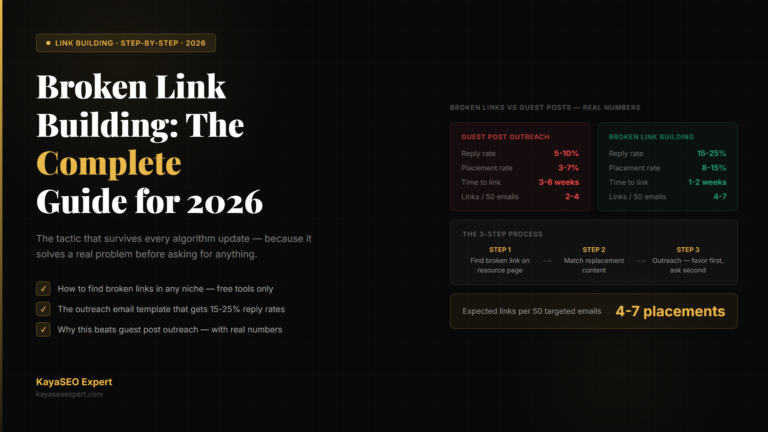
Week 5–8: Start guest post outreach — 5 emails per
week minimum. Expect a 10–20% response rate.
That’s 2–4 guest posts per month if you stay consistent.
This sequence is how to get backlinks for a new website
without triggering Google’s spam filters.
Step 3: Create Content That Attracts Links Naturally
The best long-term backlink strategy is creating content that people want to link to.
For new websites, the most effective content types are:
Original Data and Case Studies
People link to original research because it gives them something to cite. If you have any real data, results, or case studies — publish them.
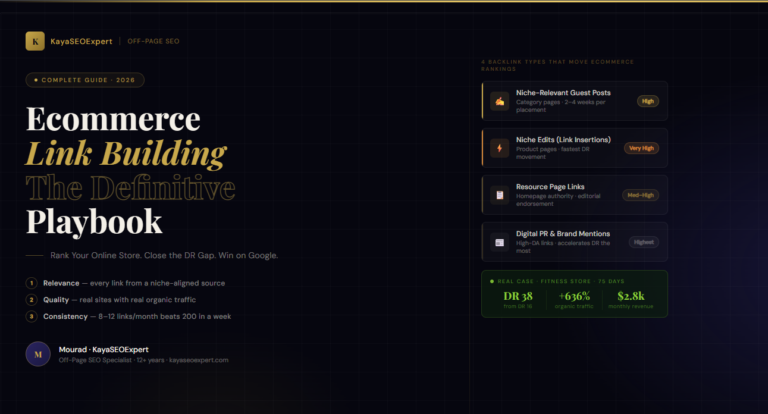
For example, one of the most-linked pieces in my niche was a case study showing how I took a website from DR 16 to DR 38 and increased organic traffic from 190 to 1,400 visitors per month in 75 days. Real numbers. Real proof. Links followed naturally.
Comparison and “vs.” Articles
“Guest Post vs. Niche Edits: Which Works Better?” — this type of content attracts links from people writing about both topics.
Ultimate Guides
Comprehensive, long-form guides that cover a topic better than anything else out there. These take time to write, but they become link magnets over months and years.
Step 4: Guest Posting (The Right Way)
Guest posting is still one of the most reliable ways to build high-quality backlinks in 2026 — but only if you do it correctly.
The wrong way: Sending mass outreach emails to any website that accepts guest posts, writing generic 500-word articles with an exact-match anchor text link.
The right way:
- Target relevant websites — only reach out to sites in your niche or adjacent niches
- Check their DR — aim for websites with DR 20+ when you’re just starting
- Pitch a real topic — offer something genuinely useful to their audience, not just something that happens to fit your link
- Write quality content — your guest post reflects your brand. Make it excellent.
- Use natural anchor text — branded anchors (“Kaya SEO Expert”) or partial match (“backlink building service”) are safer than exact match
Start with 2–4 guest posts per month. Quality over quantity, always.
Step 5: Niche Edits (Underused by New Sites)
This is a key part of how to build backlinks for a new website without risking a penalty.
Niche edits — also called link insertions — are when you get your link added to an existing article on another website, rather than writing a new guest post.
Why do they work well for new websites?
Because you’re getting a link from a page that already has traffic, authority, and backlinks pointing to it. The link juice is already flowing — you’re just tapping into it.
How to find niche edit opportunities:
- Search Google for articles in your niche that rank well
- Check if any of them mention a topic your website covers
- Reach out to the site owner and offer to add your link naturally into their existing content
- Some site owners charge a fee for this — that’s normal and acceptable
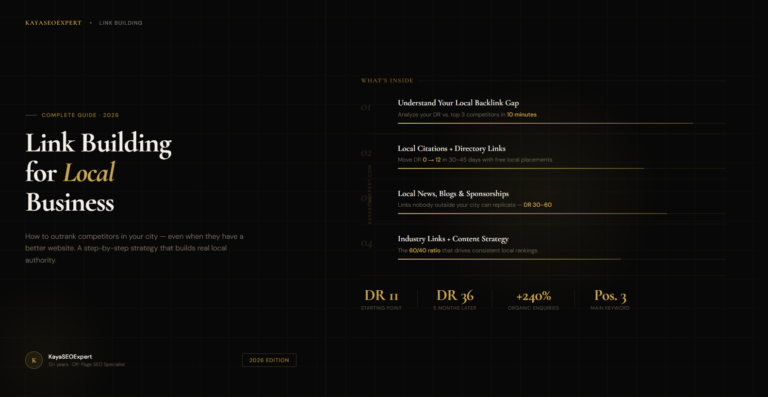
If you’re building backlinks for a local business specifically, the niche edit strategy works differently — local relevance matters more than DR. The full approach is here: Effective Link Building for Local Business in 2026
Step 6: Leverage Web 2.0 Properties (Carefully)
Web 2.0 links — from platforms like Medium, Blogger, WordPress.com, and similar sites — are often dismissed as “weak” links.
But used correctly, they serve an important role for new websites:
- They help diversify your backlink profile
- They pass some link equity when the profiles are built properly
- They’re free and under your control
The key is quality: write real, valuable content on these platforms — not spun articles or thin posts. A well-written Medium article with a natural link back to your site is genuinely useful.
Step 7: Monitor, Disavow, and Protect Your Profile
As your site starts attracting attention, you’ll inevitably get some low-quality or spammy backlinks pointing to you. This is normal — but you need to watch for it.
Use these tools to monitor your backlink profile:
- Google Search Console (free) — check the “Links” report regularly
- Ahrefs or Semrush — for deeper analysis and DR/DR tracking
If you notice toxic links pointing to your site (from link farms, adult sites, or irrelevant spam), you can disavow them using Google’s Disavow Tool.
Don’t panic about every low-quality link — only disavow if you have a clear pattern of harmful links or received a manual penalty.
Understanding how to build backlinks for a new website means knowing which links to avoid.
What to Expect: A Realistic Timeline
I want to be straight with you: link building takes time.
Here’s a realistic timeline for a new website:
| Month | What to Focus On | Expected Results |
|---|---|---|
| 1–2 | Foundation, citations, social profiles | Indexing, baseline DR (1–5) |
| 3–4 | Guest posts, niche edits begin | DR 5–15, first keyword movements |
| 5–6 | Consistent link building + content | DR 15–25, real traffic growth |
| 6–12 | Scale what works | DR 25+, consistent rankings |
The websites I’ve seen rank the fastest are the ones that stay consistent — not the ones that go hard for two months and then stop.
Common Mistakes New Websites Make With Backlinks
Before you start, know what to avoid:
Buying cheap bulk backlinks — 50 links for $10 from a Fiverr gig will likely hurt your site, not help it. Google has seen every trick in the book.
Targeting only high-DR sites — getting one link from a DR 90 site won’t move the needle alone. You need a diverse profile.
Using exact-match anchor text too aggressively — if every link pointing to your site says “buy cheap backlinks,” Google will notice. Use a mix of branded, partial-match, and generic anchors.
Ignoring content quality — you can build all the backlinks you want, but if the page you’re linking to has thin content, it won’t rank.
Final Thoughts
Building backlinks for a new website isn’t fast, and it isn’t always easy. But it’s also not complicated if you follow a clear system.
Start with your foundation. Earn your first easy links. Create content worth linking to. Do guest posts and niche edits consistently. Monitor your profile.
That’s it. That’s the system.
The process of building backlinks for a new website takes time, but consistency is what separates sites that rank from those that don’t.
If you’re still figuring out how to build backlinks for a new website, start small and stay consistent.
→ Request a Free Backlink Audit at kayaseoexpert.com
Kaya SEO Expert — Off-Page SEO Specialist with 12+ years of experience in link building and backlink strategy.